Zhenneng - Stainless Steel Kitchenware Manufacturer & Stainless Steel Cookware Factory For Over 35 Years
Language
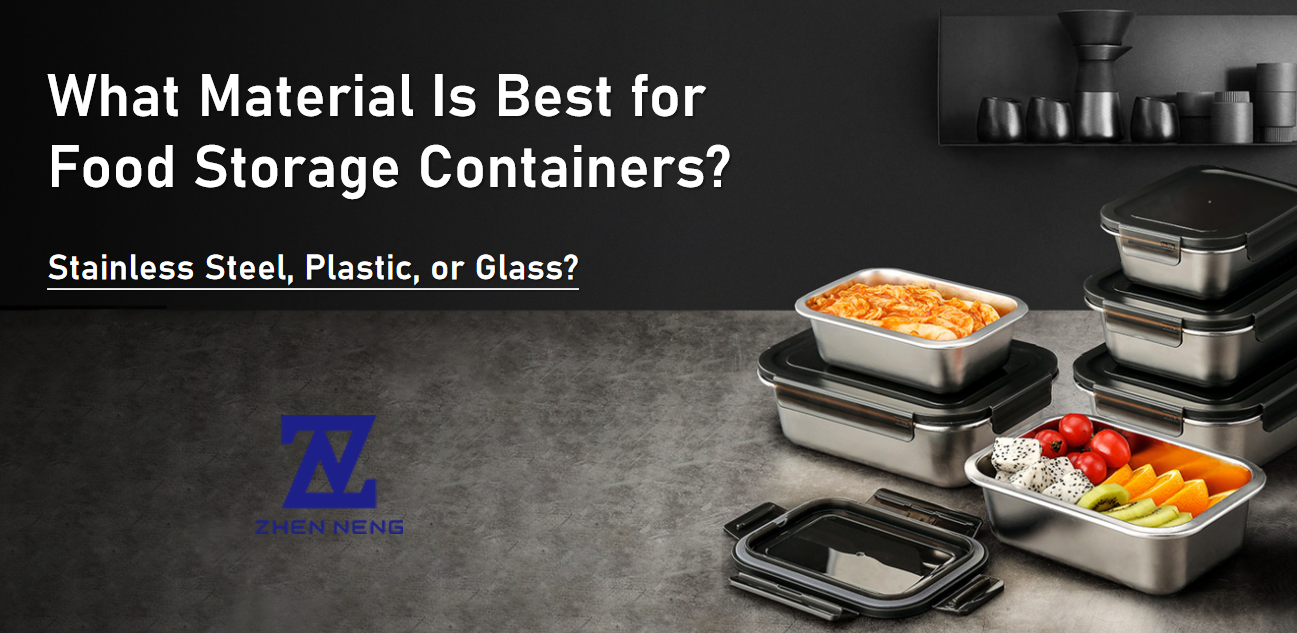
Food containers don't have to be just about looks; material matters, too. Learn why stainless steel food storage containers are the safest choice for every kitchen.
Food storage containers have evolved beyond simple convenience. Ease and organization surely do contribute, but material quality is what truly makes or breaks the safety of the food you prepare and store.
People are much more conscious of what their food comes in contact with long after cooking. Research confirms that even low-level chemical migration from your everyday storage containers can gradually introduce toxins that silently affect your long-term health. So, what is the safest and smartest science-backed solution for meal organization that doesn't expose you to hidden toxins? Stainless steel food storage containers.
Stainless steel containers have every reason to be the top choice for health-conscious food storage. Jump in, and you'll see exactly why stainless steel is stealing the spotlight.
Why Is Choosing the Right Food Storage Container Important?
Food storage containers seem too basic to question. But the wrong pick can cost you more than you notice at first. From kitchen cabinets to your refrigerator shelves, food storage containers have a far greater impact on your meals than you might expect. Here are a few critical reasons why choosing the right food storage container influences both your health and the freshness of your meals.
1. Harmful Chemical Migration
Harmful chemical migration is the first and most serious reason why you must choose food storage containers carefully.
Because heat, acidity, and fat accelerate the release of harmful chemicals from certain plastics and mixed-material containers directly into the foods you store and eat.
2. Freshness, Flavor, and Shelf Stability
Vitamins are the first nutrients to degrade when containers lack proper sealing and allow repeated air contact during storage. As oxidation sets in, food loses freshness from the inside out. And the flavor intensity? Yes, it loses its punch over time.
Shelf stability really depends on how well food is protected from air exposure. So, if containers allow airflow, stability suffers.
3. Hygiene and Bacterial Control
When storage isn't sanitary and allows moisture or residue to linger, even the freshest food is at risk of rapid decay.
Bacteria have a remarkable ability to multiply in unsanitary conditions. So, if, for example, the storage fails to stay completely dry and ensure sanitation, it's not too late for bacteria to invade and overrun even the most carefully stored food.
Stainless Steel Food Storage Containers
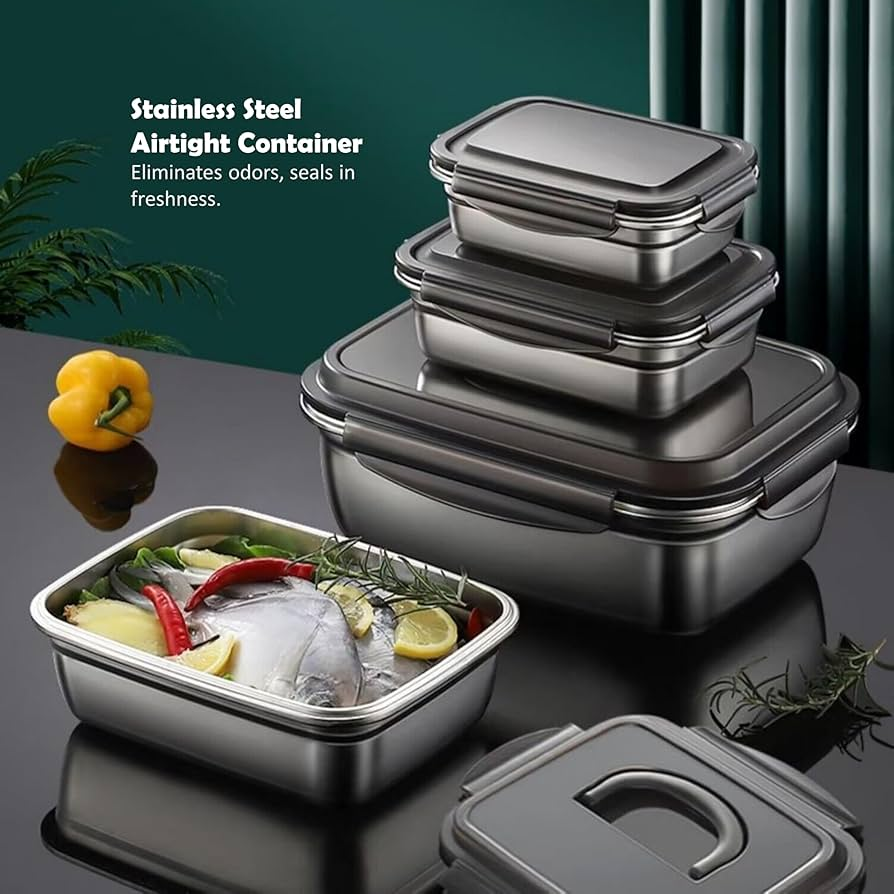
Stainless steel is not some innovation or a flashy kitchen trend; it has been trusted for decades, and is relied upon across industries where hygiene is absolutely critical. Let's get clarity on this by examining the advantages and disadvantages of choosing stainless steel over plastic and glass.
Advantages
1. Food safety is something that goes far beyond taste. Stainless steel food storage containers offer a chemically stable environment and are engineered to keep food exactly as intended.
2. As stainless steel doesn't contain BPA, phthalates, PFAS, or microplastics, nothing migrates into your meals over time. 0 chemical transfer.
3. As stainless steel containers are durable, repeated use never weakens performance. Dents, cracks, and fatigue? All nonexistent!
Disadvantages
1. People who want to quickly identify a food in the container would definitely struggle a bit.
a. As glass and plastic let you see the contents immediately, confusion is rare and almost never a concern with transparent storage. But stainless steel hides the contents, requires you to peek inside, and rely on notes.
2. Stainless steel costs a bit more financially, but as performance justifies it, this con is not really a dealbreaker.
3. As microwaves don't allow metal containers, reheating takes an extra step. You'll have to swap containers before heating.
Plastic Food Storage Containers
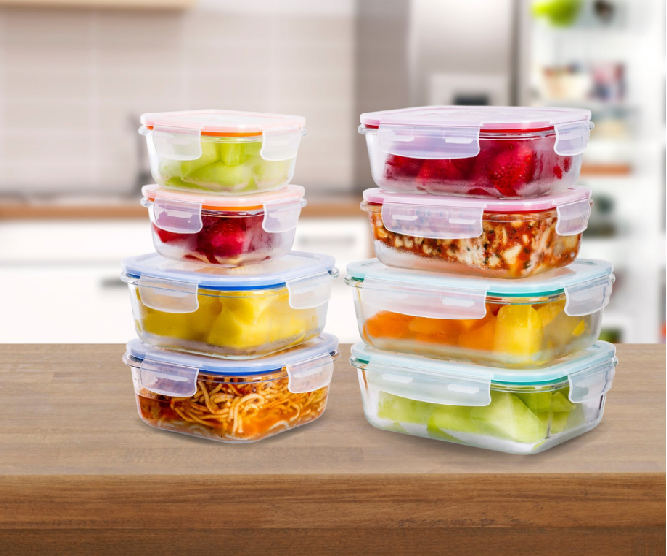
Plastic food storage containers are the first go-to for many families. As these containers are affordable and handy, people often grab them without thinking about the hidden toxins and their influence on overall meal quality. So, let's talk about why convenience isn't always what it seems.
Advantages
1. As plastic containers ensure comfort and are easy to carry, they make storing lunchboxes or snacks effortless. Also, they are excellent for frozen meals because they don’t shatter like glass alternatives.
2. Budget-conscious people appreciate the ease of purchasing in bulk without stretching their monthly budget. This is exactly why most homes are well-stocked with plastic storage solutions.
3. As the stored food can be easily seen without opening the lid, you can monitor freshness more easily. Also, it saves effort in meal prep.
Disadvantages
1. BPA-free plastic containers surely are better than regular plastics, but they aren't completely risk-free for long-term food storage.
a. Estrogenic compounds are not completely eliminated even in BPA-free plastics. So, if one doesn't want hormone-disrupting compounds in their meals, it's wise to select fully inert materials for meal storage.
2. Heating and freezing cycles can be stressful on plastic containers.
a. Microplastics can enter food during rapid temperature changes from freezer to stovetop. So, definitely choosing glass or stainless steel containers instead will be a proactive approach.
3. As plastic absorbs odors and stains over time, you won't avoid faint discoloration of light-colored foods. Aesthetic appeal suffers.
Glass Food Storage Containers
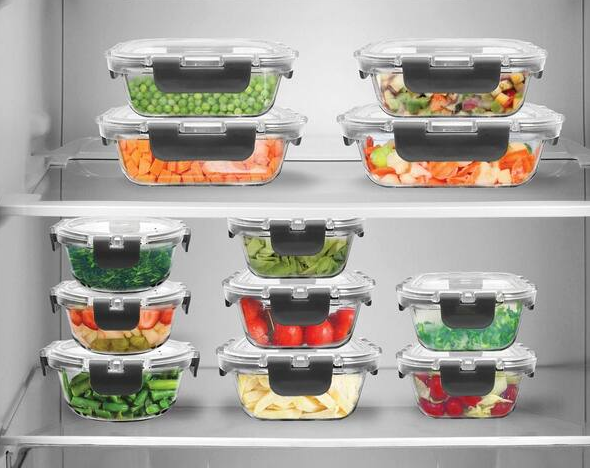
Glass containers are the most transparent and visually reassuring storage option for those who enjoy neat, visually organized fridge layouts. Besides aesthetics, there is something psychologically calming about clear visibility, which helps the brain process order more naturally and calmly. Let's look beyond the shine to assess true performance.
Advantages
1. Chemicals stand no opportunity to migrate when storage surfaces do not degrade. Glass has that inherent stability that keeps food chemistry intact without any alteration to taste or aroma.
2. As glass is transparent, there's no need to guess the contents. On top of that, meal planning and portioning are stress-free, and the fridge looks neat and orderly. So, clutter is easily avoided.
3. Recyclability is one of the reasons glass remains a sustainable choice. You reduce landfill, and make your kitchen truly eco-friendly. How exactly? Well, old glass is transformed into new storage solutions by just sending it to a recycling center.
Disadvantages
1. Fragile glass can break if dropped, demanding extra attention while stacking or storing in crowded cabinets. In fact, temperature shocks may crack even sturdy glass.
2. If portability is your priority, glass may not serve you better. Plastic and stainless steel, in contrast, are much more forgiving for travel and on-the-go use, and are convenient, practical, and low-maintenance.
3. Lids are more often made of materials that are not always completely inert, like glass. Take plastic lids, for example. Most glass containers offer excellent chemical stability, while lids can slowly compromise the purity of meals kept inside the container.
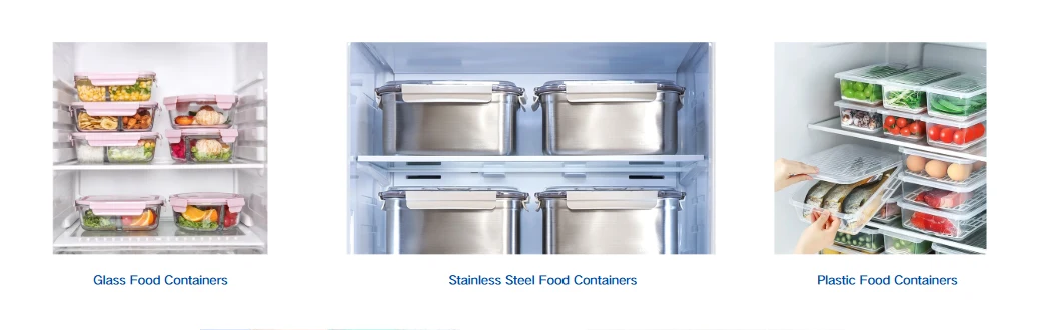
Glass, Plastic, and Stainless Steel Storage Containers Comparison
Let's compare stainless steel, glass, and plastic storage containers side by side, to help you make an informed decision
| Feature | Stainless Steel | Plastic | Glass |
| Chemical Safety | Excellent | Variable | Excellent |
| Durability | Very High | Low-Medium | Medium |
| Microwave Safe | No | Some | Yes |
| Freezer Safe | Yes | Yes | Yes |
| Odor Resistance | Excellent | Poor | Excellent |
| Weight | Medium | Very Light | Heavy |
| Visibility | No | Yes | Yes |
| Environmental Impact | Low | High | Medium-Low |
| Lifespan | 10-30+ years | 1-5 years | 5-15 years |
Conclusion
A perfect food storage container doesn't truly exist in absolute terms, but you can always make an informed choice based on what matters most to your health and lifestyle. Over plastic and glass, stainless steel food storage containers protect meals from chemical migration better than any other material. It's all about peace of mind that your meals remain safe, healthy, and fresh from fridge to table.
Those who seek freedom from BPA, phthalates, and chemical migration into food need to choose stainless steel without compromise. ZHENNENG meets the expectations of families prioritizing non-reactive food storage. So, if you believe food safety starts at storage, then choosing ZHENNENG is a logical and responsible next step.
FAQS
1. Are stainless steel storage containers a good choice for food storage?
Absolutely. Stainless steel containers keep every ingredient safe from contamination and oxidation. That way, your food lasts longer and tastes exactly as it should.
2. How to extend the lifespan of food storage containers?
It's all about some mindful habits to extend usability and protect materials from premature wear. First, don’t subject materials to unnecessary heat stress. Secondly, avoid harsh chemical cleaners that weaken materials. Lastly, dry containers thoroughly before stacking or sealing.
3. Can food be frozen in any type of container?
Glass is probably not ideal for freezing unless it's explicitly freezer-safe. As for plastic, it is only acceptable for freezing if it allows expansion. Stainless steel food storage containers are the only truly reliable option for safe, stress-free freezing without cracking in sub-zero conditions.
4. What is the best way to remove odors from food storage containers?
For stainless steel containers, there's no better way than wiping with diluted white vinegar and rinsing thoroughly with warm water afterward. As for glass, going for a baking soda scrub keeps odors at bay. Lastly, plastic doesn’t need complex methods; soap, water, and patience suffice.


LEAVE US A MESSAGE
Zheneng people continue to forge ahead, with the virtuous humanities and exquisite technology perfect combination, full of Unite love of life for you to create elegant, delicate stainless steel daily use and kitchen tableware supplies, With high quality and efficient after-sales service.
Copyright ? 2025 Guangdong Zhenneng Stainless Steel Industry Co., Ltd. - www.138098.net. All rights reserved . ISSN 2024181357-1