



Ceramic Cookware vs. Stainless Steel Cookware: What's Your Pick?
When looking for the right cookware for your home or professional kitchen, stores (both online and physical) have endless options to offer. Among these numerous options, ceramic cookware and stainless steel cookware are the most common selections.
They are widely used in both residential and commercial cooking systems and have very different properties. Some of us like the non-stick nature of ceramic pans, while others prefer the toughness and sturdiness of stainless steel pots.So, which one should you pick? Let's answer this question for you in this article, highlighting the basic differences between the two and helping you choose the most appropriate type for your kitchen.
Key Features of Stainless Steel Cookware
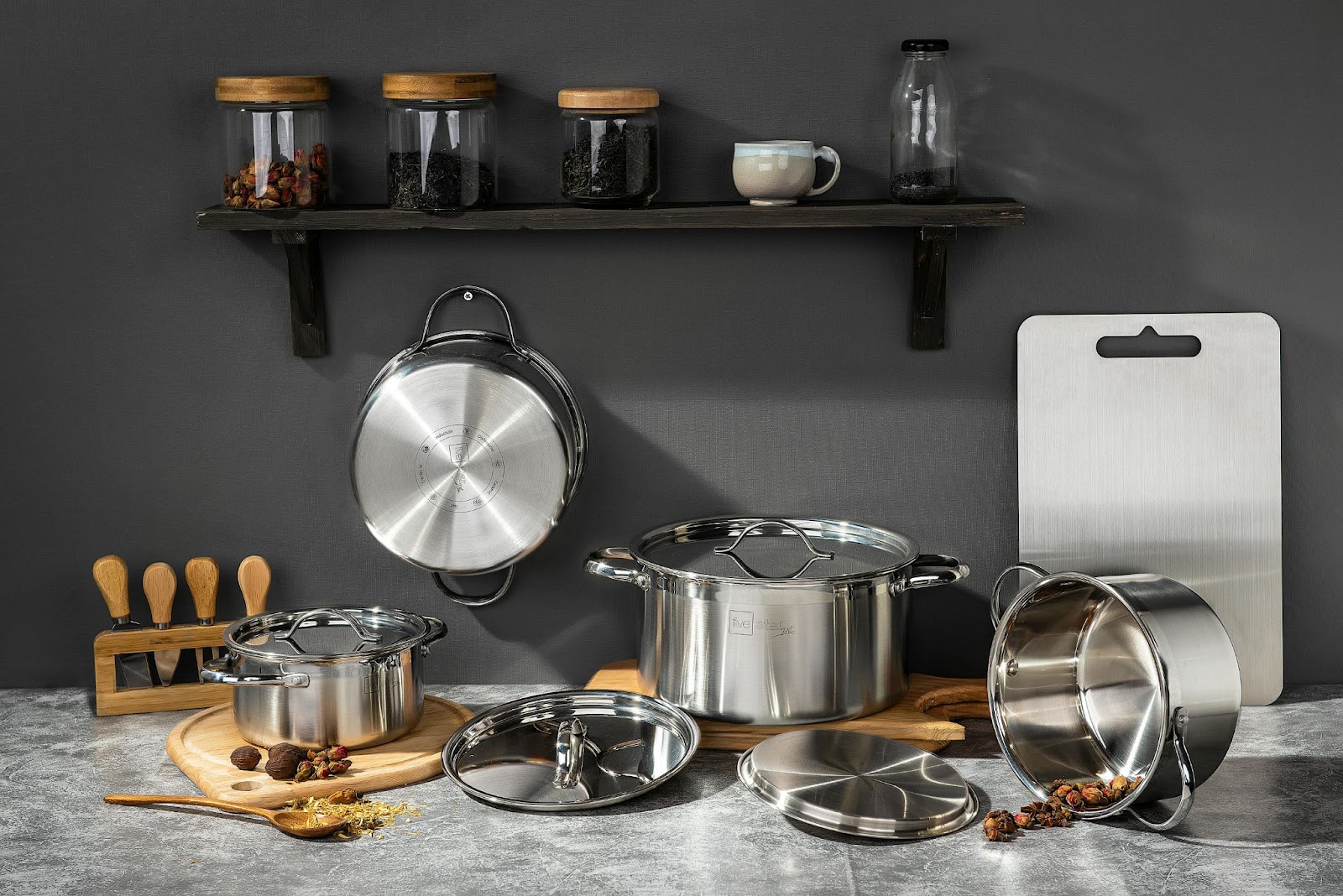
Stainless steel pots and pans have a reputation for being resilient, dependable and long-lasting. It has been the standard of professional kitchens, and for a good reason.
Stainless steel was introduced in the early 20th century as a combination of rust-free iron and chromium. It has become one of the trendy cookware materials that comes with a lifetime guarantee of durability. Stainless steel does not need the non-stick coating like ceramic. Instead, it is most commonly used due to its durability and higher temperature resistance.
Fine stainless steel cookware may also be manufactured with an aluminum or copper core between layers of steel. This induces a high-heat-conducting effect, which creates a slow heating of the pans without affecting the overall strength of the steel.
Key Features of Stainless Steel Cookware
Durability: Stainless steel can last for decades when maintained properly
No coating: You do not need to worry about chipping or peeling
Oven- and dishwasher safe: Can be used with nearly any cooking technique.
Heat tolerance: Ideal in searing, browning and deglazing
According to industry-specific reports, stainless steel is a standard presence in professional kitchens, due to its even heat distribution, durability, versatility, and inert metal surface.
Pros and Cons
Pros of Stainless Steel Cookware
Let’s talk about some of the key strengths that explain why stainless steel cookware has been trusted for generations.
Extremely durable and long-lasting
No risk of toxic fumes or peeling
Oven- and dishwasher-safe
Great for browning and searing
Resistant to rust and stains
Cons of Stainless Steel Cookware
Stainless steel also comes with a few downsides worth keeping in mind. Here are some cons:
Food can stick without enough oil or skill
Can be heavier than ceramic pans
Requires practice to prevent burning
Pricier upfront cost for high-quality sets
Poor heat distribution without aluminum/copper core
Why People Choose Ceramic Cookware?

Ceramic cookware has become increasingly popular in modern kitchens, due to its non-stick surface and healthy cooking. Nevertheless, ceramic is not a novice in the kitchens; it has been there for ages.
Initially, these ceramic pots were manufactured using clay; they were baked in the kilns, but today, when we mention “ceramic cookware”, we most probably talk about metallic pans covered with a ceramic layer.
The material used in the ceramic coating is a sand-based product (silica) that offers a glass-like finish. It is a naturally slick pan that requires little oil or butter to cook. This has been one of the most decisive factors in the popularity of ceramic cookware in most households. They are great for cooking meals and are friendly to the human body, and are free from synthetic coatings.
Key Features of Ceramic Cookware
Non-stick surface: It enables the food to slip off with minimal or no oil.
Even heating: The heat is distributed evenly by the ceramic layer.
Eco-friendly image: Ceramic coatings are PFOA and PTFE free (chemicals found in conventional non-stick cookware).
Attractive designs: Ceramic cookware is mainly designed in different colors which will make your kitchen appear cool.
According to a survey in 2022, nearly 38% of the people seeking out non-stick pans selected ceramic cookware because they thought it was safer and healthier than other coated pans.
Pros and Cons
Pros of Ceramic Cookware
Let's have a closer look at the key benefits of ceramic cookware which make it such a popular option in modern kitchens.
Requires less oil for cooking
Easy to clean
Doesn’t release fumes at high heat
Usually lightweight and easy to handle
Available in stylish colors and designs
Cons of Ceramic Cookware
Now, here are some of the drawbacks you should know before choosing ceramic pans.
Coating wears out over time
Not dishwasher-safe in most cases
Prone to scratches if you use metal utensils
Doesn’t last as long as stainless steel
Uneven performance in high heat
Ceramic Cookware vs. Stainless Steel Cookware: Which one is better?
While no single cookware is perfect for every task, let’s compare both ceramic and stainless steel side-by-side to give you a better idea.
Looking at the table, it is obvious that using ceramic cookware is suitable when you want convenience and ease of use. However, if you are looking for a durable cookware that can cook anything and be with you through some tough kitchen tasks, then stainless steel is your best bet.
Final Words
In the ceramic cookware vs. stainless steel cookware debate, there is no single winner. Ceramic wins when you need convenience and are looking for cookware for light cooking tasks. While stainless steel wins if you are looking for a reliable kitchen partner, and you do not mind scrubbing.
The best approach is to have both, because they allow flexibility. The ceramic pan is more suitable for day-to-day tasks such as frying eggs, and stainless steel pots are suitable for challenging tasks such as searing steak or making soups. And when in doubt, ask yourself: What do I cook most? Your response will help you choose the cookware that suits your lifestyle the most.

Enterprises through the IS09001 International Quality Management System and IS014001 International Environmental Management system certification. Won a number of national patents, electrical products through the national mandatory CCC attestation.